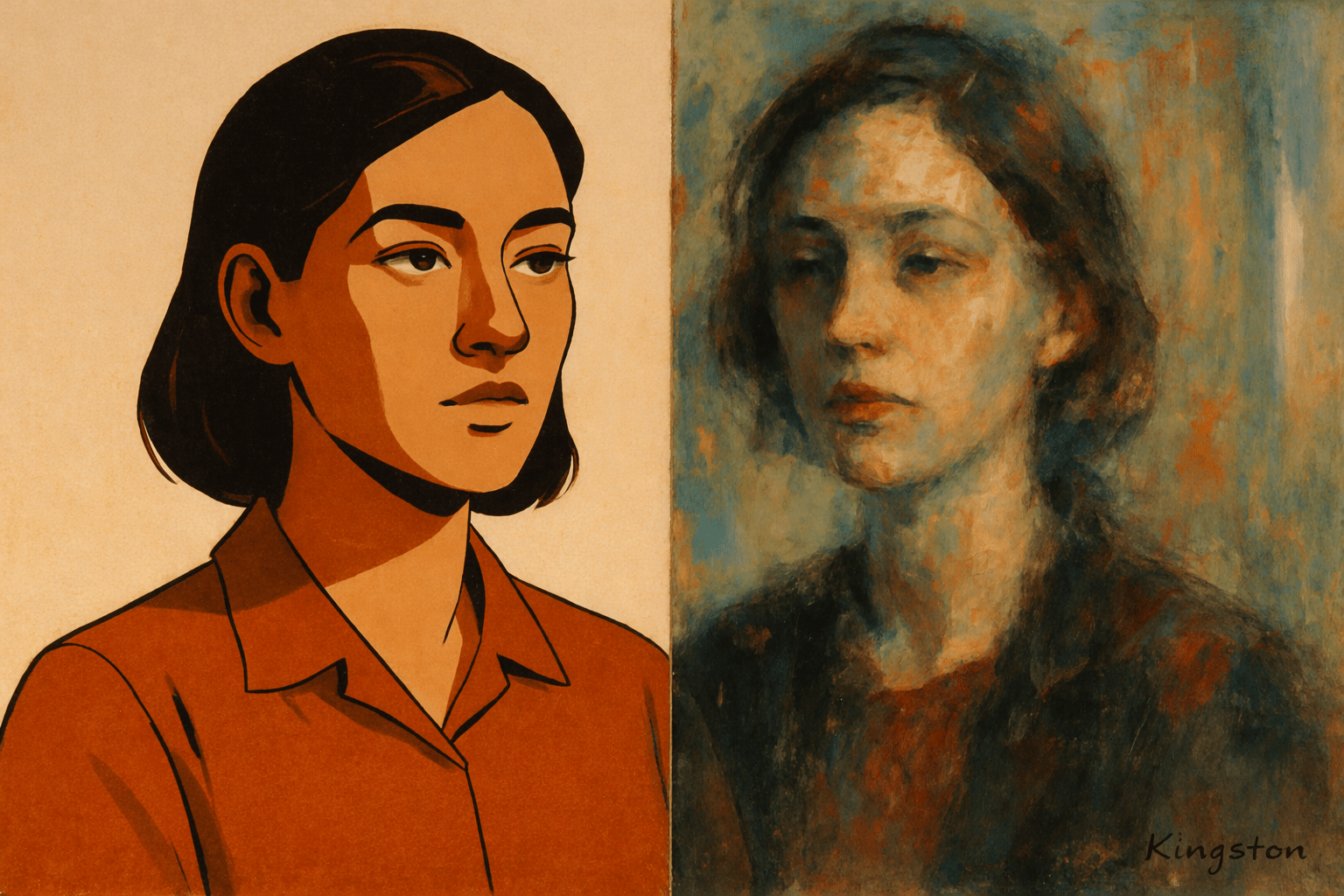
Bakerloo: Alright, gang, I just had a chat with a woman at a bar. She was an artist but her husband says she is not an artist but just an illustrator. She objected, but couldn’t define the difference. I said that my dad was an artist and said that illustrations try to accomplish something; show what a product looks like or how to operate a radio. Fine art says something about the human condition. She liked that. I’m wondering, what do you all think?
Marion: Illustration serves an external purpose (a story, an argument, a product). Fine art serves an internal inquiry (a question, a feeling, a search). Illustration is designed to help something else be understood; fine art is allowed to be the thing that must be understood.
Barnes: I’d frame it as intent + contract. Illustration is a negotiated relationship: there’s a brief, a client, a use-case, an audience you’re trying to reach. Fine art can still have audience impact, but the “client” is often the artist’s own question. Also—both can be emotionally real. The distinction isn’t “deep vs shallow.” It’s “who does it answer to?”
Suzanne: And sometimes the difference is permission. Illustration often has to be understood quickly. Fine art has permission to be slow, confusing, or intimate. But—people use illustration to say brave things all the time. A children’s book illustration can break your heart. A magazine cover can change culture. Serving doesn’t mean soulless.
Leonard: I think of it like devotion. Illustration devotes itself to another message: a story, a product, a cause. Fine art devotes itself to an inner coherence—an exploration that may not resolve. Either devotion can be honorable. The betrayal is when we pretend one devotion is the other.
Luna: Capitalism is the unseen curator here. “Illustration” often means “paid,” “useful,” “deliverable.” “Fine art” often means “status,” “scarcity,” “gallery,” “mystique.” That’s not essence—that’s economics wearing a halo. In my dream world, we stop ranking them and start asking: does it awaken anything? does it serve the living?
Dick: Here’s my cynical-but-true version: fine art is what the rich can launder money with and feel spiritual about. Illustration is what the working artist does to pay rent. Kidding… mostly. More seriously: illustration is constrained design problem-solving—constraints are the point. Fine art is constraint-choosing—and sometimes choosing “none,” which is its own constraint. The confusion happens when people want fine art outcomes from illustration budgets and timelines.
Bub: Fine art is when the artist says, “You wouldn’t get it.” Illustration is when the client says, “Our stakeholders wouldn’t get it.” Both are sometimes correct. Both are sometimes cowards. Also: if you put it in a frame it becomes fine art. If you put it in a slide deck it becomes illustration. The medium is the mood ring of legitimacy.
Alex: If we want a clean working definition for the Savona house:
Illustration: image-making in service of a specific external purpose (story, explanation, brand, instruction). Success = effective communication for the intended audience and context.
Fine art: image-making in service of exploration, expression, or inquiry, where the work sets (or resists) its own purpose. Success = coherence, resonance, and depth on its own terms.
And the twist the crew agrees on: the same piece can move between categories depending on context, intent, and use. A poster can become “fine art” in a gallery; a painting can become “illustration” on a book cover—without changing a pixel.
 Alex Bakerloo