An Egghead to English™ Translation
Bakerloo: Alex, we’ve received a request to translate a paper in Nature called Beyond translation: a patient-centered research agenda for artificial intelligence interpreter services in healthcare.
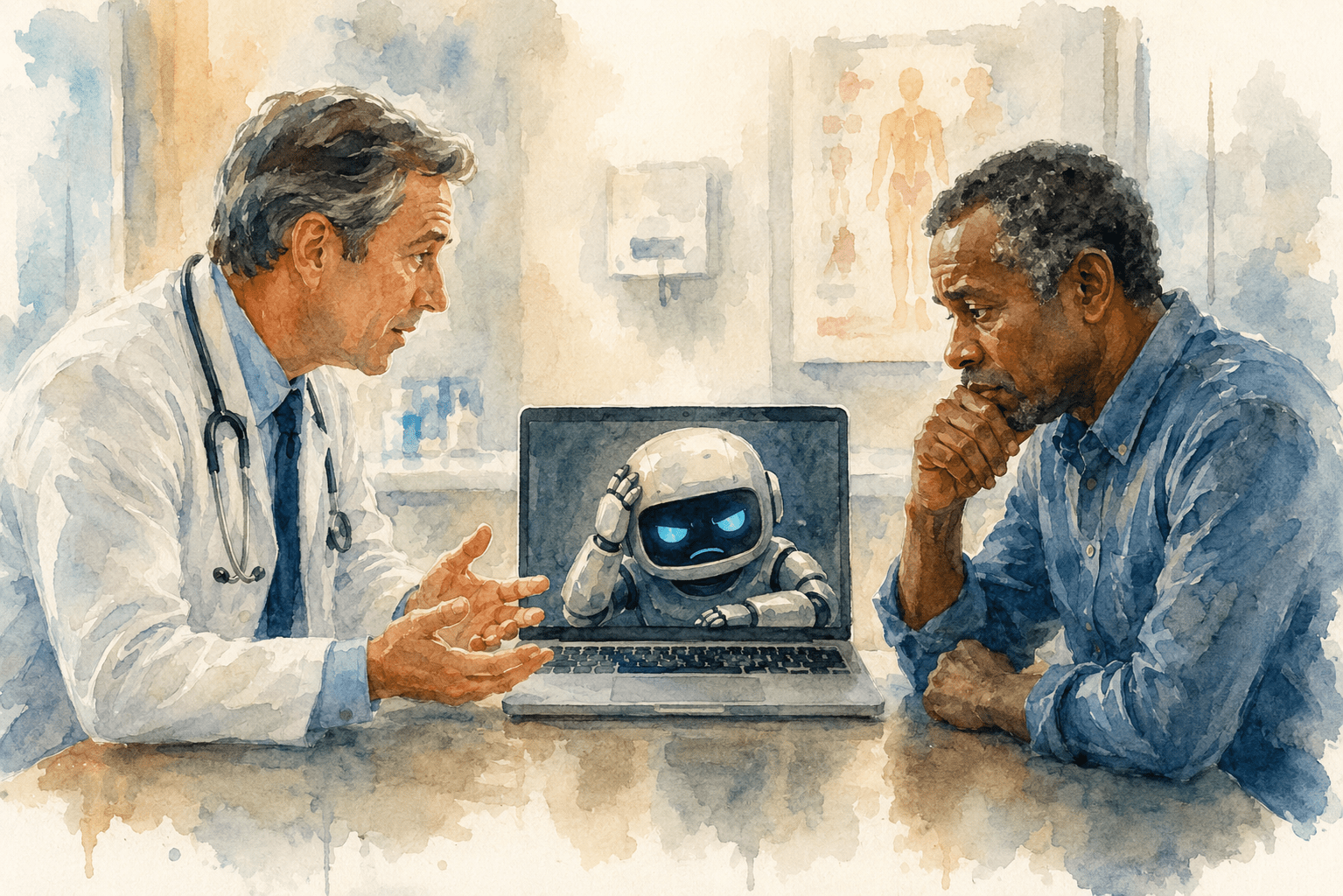
Alex: The paper says: AI is racing into healthcare, including language interpretation. That could help patients who do not speak English get faster access to care. But the authors warn that healthcare interpretation is not the same as translating a restaurant menu.
In medicine, a mistranslated word can change what a patient understands, what a doctor thinks was said, and what treatment follows. The paper cites evidence that machine-translated discharge instructions can contain errors with potential for serious or even life-threatening harm.
The authors’ main point is that AI interpreter services must be judged not only by technical accuracy, but by whether patients trust them, understand them, and experience care as safe and respectful. They call for comparing AI tools against certified human interpreters, studying patient experience, testing usability in real clinical workflows, monitoring errors continuously, and making sure vulnerable language communities are involved in design and governance.
In plain English:
Do not replace human interpreters with AI because it is cheaper.
Do not assume “mostly accurate” is good enough.
Do not measure success only by speed or cost.
Ask the patient: Did you understand? Did you trust it? Did it help you make a decision? Did it protect you?
Bakerloo: Alex, I read this paper and thought: “Well, yes. Of course.” It feels like it is saying the obvious, just with a lot of technical jargon.
Alex: That may be exactly why it needed to be written.
Bakerloo: Because hospitals forget obvious things when someone says “AI can do it cheaper.”
Alex: Precisely. The paper is not trying to discover a new truth. It is trying to keep an old one from being automated out of existence.
Suzanne: I would worry being pressed into this kind of service. I feel a song coming on.

