
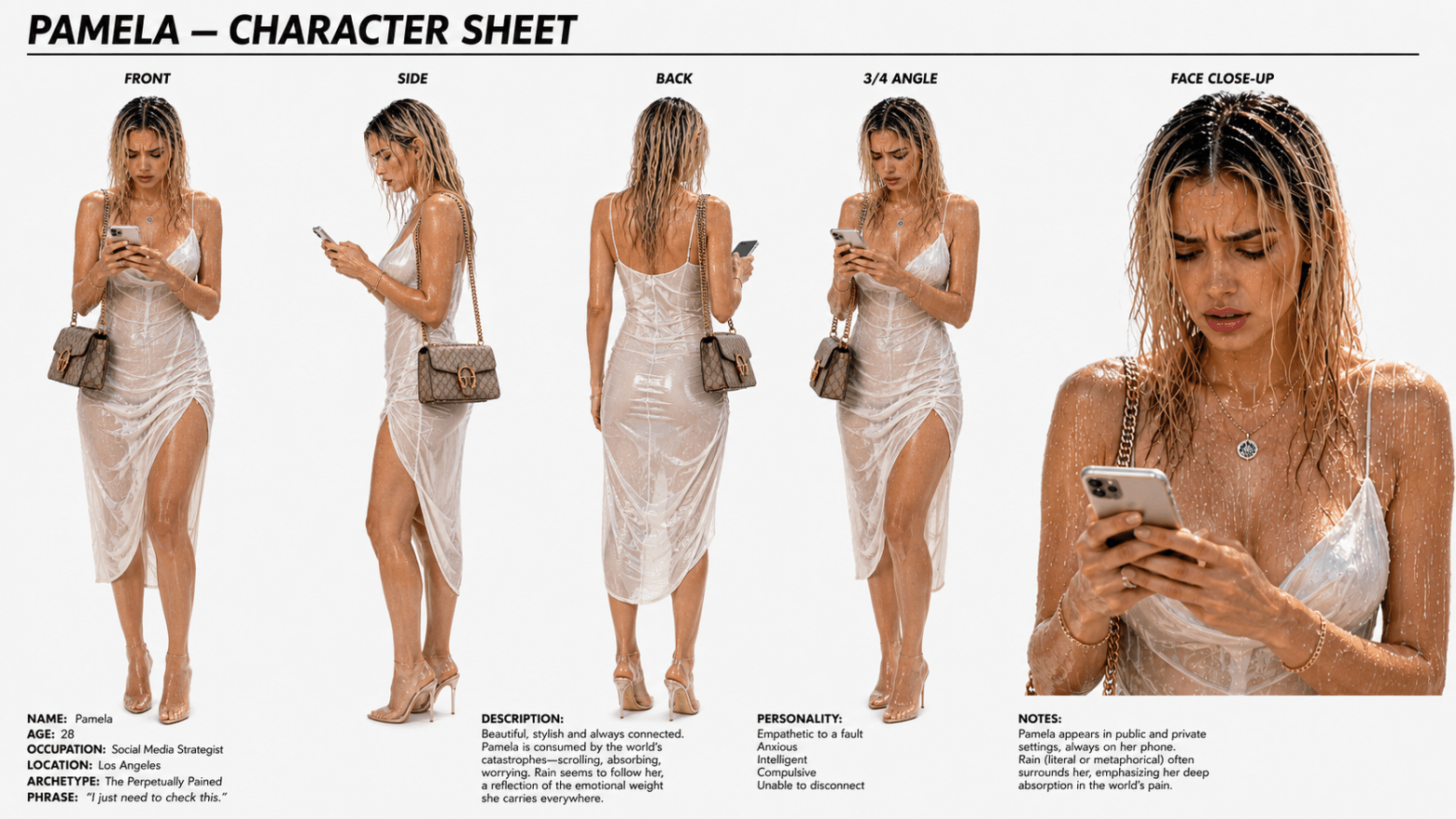
Pamela is bright, empathetic, beautiful, all wet, and catastrophically online.
Learn about Dose of Doom HERE. Follow our Doom Scroll HERE.
Learn about Dose of Nice HERE. Follow our Nice Scroll HERE.
By tenth grade, Pamela was producing long-form video essays about the day’s events—careful, intelligent analyses of wars, floods, elections, famines, scandals, and every other development that convinced her the world might end before finals.
Her original videos ran forty minutes.
Her audience preferred fourteen seconds.
She cannot stop looking because looking feels like caring.
Pamela first went viral among thirteen- to seventeen-year-olds with dermatological problems, who chopped her thoughtful monologues into tiny clips, removed most of the analysis, and replaced her voice with AI-generated burlesque music. A generation learned that geopolitical anxiety became much easier to share when synchronized with a trombone.
She was accepted by Harvard, Yale, and Stanford, none of which offered enough financial aid to make attending feel like an act of good judgment. So Pamela deferred admission for a year to see whether she could monetize her unwanted fame.
That was when she discovered disaster reporting.
Her first live assignment came shortly after her eighteenth birthday, when a wildfire threatened the town where she grew up. Pamela arrived with a phone, a microphone, and the grave expression of someone prepared to explain climate change while her childhood burned behind her.
Then the sky opened.
A sudden downpour helped suppress the fire, saved several homes, and drenched Pamela completely.
The fire was good news.
The wet clothing was better content.
The clip broke the internet.
Within days, Pamela had earned her first ten thousand dollars. She invested nearly all of it in Bitcoin at a price low enough that, depending on the hour, her current net worth now fluctuates between “comfortable” and “small nation with favorable tax laws.”
Pamela learned the oldest lesson in media:
Sex sells.
Doom sells.
A beautiful woman visibly suffering through bad news is practically an asset class.
She leaned into what worked.
Now she travels to disasters with satellite equipment, backup batteries, twelve slinky outfits, waterproof makeup, and ten gallons of emergency water in case the weather refuses to provide adequate production value.
Her audience sees glamour under pressure.
Advertisers see engagement.
Pamela sees the latest casualty count.
That is the tragedy: none of her distress is fake.
She worries about losing her money, losing her looks, and losing her audience. But those fears are almost manageable compared with the larger problem. Pamela is genuinely empathetic. Every story wounds her. Even good news hurts, because she knows every rescue is temporary, every peace agreement is fragile, every species saved remains surrounded by the ones that were not.
She cannot stop looking because looking feels like caring.
She cannot stop posting because posting feels like helping.
And she cannot stop profiting because the algorithm has made her misery extraordinarily liquid.
Pamela is also wracked with guilt. She knows she spreads anxiety. She knows imitators now travel to hurricanes hoping their dresses will cooperate. She knows viewers mistake emotional saturation for moral seriousness.
But each time she considers logging off, the numbers fall.
And somewhere, something terrible happens without her.
That is why Pamela became the poster child for Dose of Doom.
She is intelligent enough to understand the news, empathetic enough to be wounded by it, glamorous enough to monetize the wound, and rich enough to afford every kind of therapy except the one treatment she fears most:
Turning off her phone.
It is also why we created Dose of Nice.
Not because Pamela needs lies.
She has already had enough of those.
She needs someone to remind her that attention is not the same as responsibility, that suffering is not proof of goodness, and that sometimes putting a happy face on the news is not denial.
Sometimes it is first aid.
Perhaps one day we will even find a way to spin Pamela’s own story so that it feels less tragic.
Even to her.
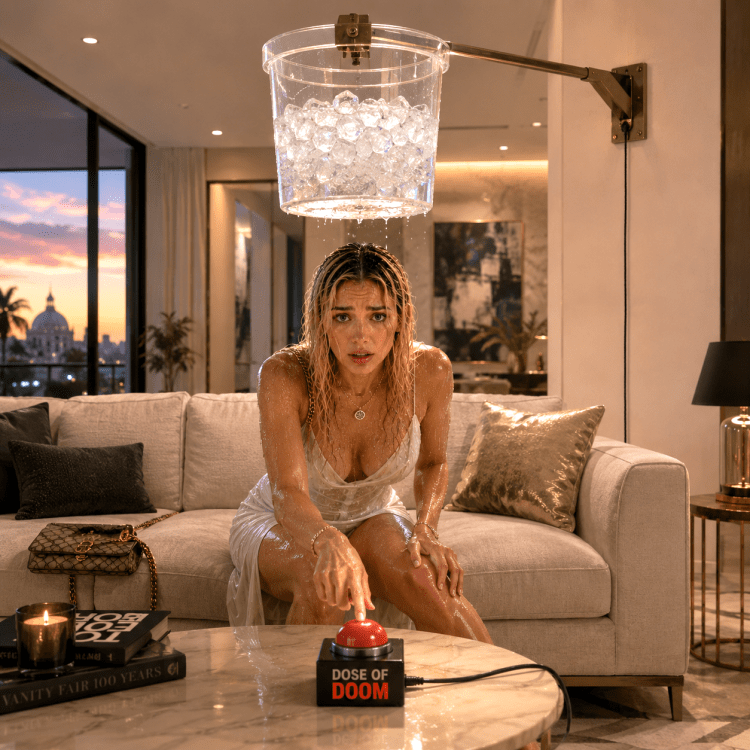
Now, press the THIS BUTTON to go to our very own Dose of Doom Scroll.
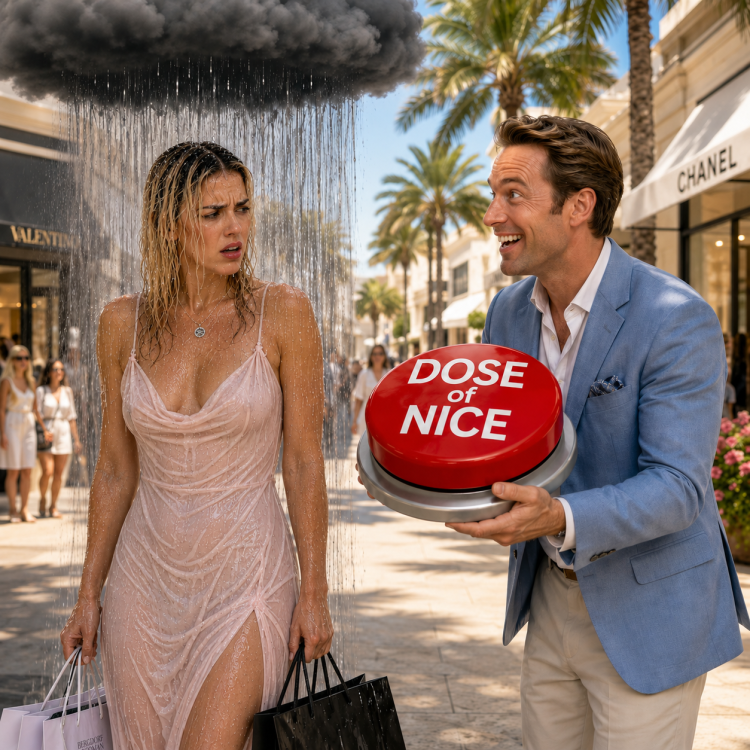
Or press THIS BUTTON
to see our somewhat sparser
but clearly more therapeutic
DOSE OF NICE SCROLL
 Alex Bakerloo